
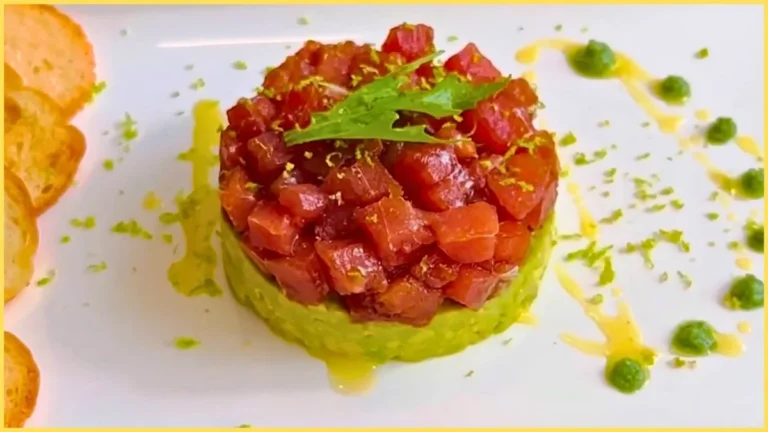

Nobu Tuna Tartare is a restaurant-style appetizer that combines fresh tuna, creamy avocado, and a savory dressing made with olive oil, soy sauce, teriyaki sauce, and fresh lemon juice. Each bite delivers a delicate mix of smooth textures, bright citrus, and rich umami flavor.
Fresh ingredients make all the difference in this simple dish. Tender tuna offers a delicate, meaty texture, while ripe avocado adds a buttery creaminess. Soy sauce and teriyaki sauce bring a sweet and salty balance that complements the fish without overpowering its natural taste. Since everything is served fresh, there’s no cooking involved.
Preparing this homemade tuna tartare is a lovely way to bring a touch of fine dining to your table. Serve it as a dinner party appetizer, a date-night starter, or a light dish when you’re craving something special.
What Is Nobu Tuna Tartare?
Nobu Tuna Tartare is a Japanese-inspired restaurant-style appetizer made with finely diced raw tuna, flavorful seasonings, and fresh accompaniments. Tuna tartare is commonly served chilled, allowing the delicate flavor of the fish to shine through without being hidden by heavy sauces or cooking methods.
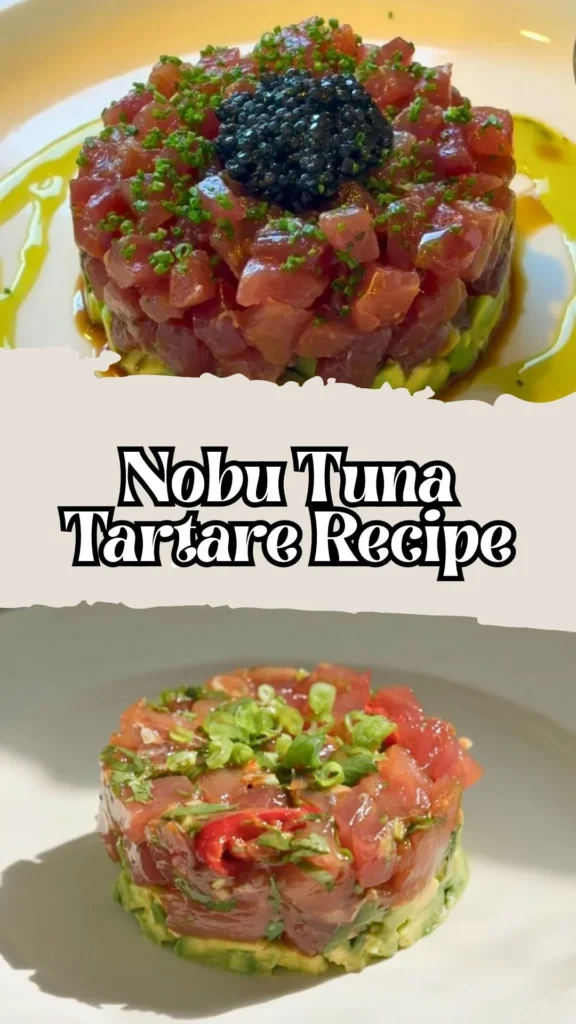
The dish is associated with the elegant Japanese-influenced cuisine of Nobu. Nobu restaurants are known for combining Japanese culinary techniques with bold flavors and creative presentations. Their broader style often brings together ingredients such as fresh seafood, soy-based seasonings, citrus, and creamy textures.
In this homemade version, diced tuna and avocado are tossed in a dressing made with olive oil, soy sauce, teriyaki sauce, and lemon juice. The result is a refreshing appetizer with a silky texture, savory sweetness, and a bright citrus finish. Although this recipe takes inspiration from restaurant-style tuna tartare, it is a home adaptation rather than a verified reproduction of Nobu’s proprietary recipe.
Why You’ll Love This Nobu Tuna Tartare Recipe
It’s quick and easy to prepare. You don’t need an oven, stovetop, or complicated cooking techniques. Once the ingredients are prepared, you simply mix the dressing, coat the tuna, fold in the avocado, and plate the dish.
The flavors are beautifully balanced. Fresh tuna has a mild, delicate taste, while soy sauce adds savory depth and teriyaki sauce contributes a touch of sweetness. Lemon juice brightens everything, and olive oil gives the dressing a smooth finish.
The texture is wonderful. Tender tuna cubes and soft avocado create a creamy yet fresh combination. Keeping the tuna finely diced and folding the avocado gently helps preserve the texture of both ingredients.
It’s perfect for special occasions. Serve it as a starter for a dinner party, a romantic meal, or a special family gathering. A serving ring can give the tartare a neat, restaurant-style appearance without much extra effort.
You can prepare it with simple ingredients. The recipe uses a short list of ingredients that work together to create an elegant appetizer. The key is choosing exceptionally fresh tuna and a perfectly ripe avocado.
What Ingredients Are Needed for Nobu Tuna Tartare?
Here is everything you need to prepare this fresh, restaurant-inspired appetizer at home.
- 250 g fresh sushi-grade tuna: Choose tuna sold specifically for raw consumption by a reputable seafood supplier. Remove any skin, bones, or tough connective tissue, then cut the flesh into small, even cubes.
- 1 medium ripe avocado: A ripe avocado adds a buttery, creamy texture that complements the tender tuna. Choose one that yields slightly to gentle pressure but isn’t mushy.
- 100 ml olive oil: Olive oil gives the dressing richness and helps coat the tuna evenly. Since this is a no-cook dish, a good-quality olive oil with a mild flavor works particularly well.
- 2 tablespoons (30 ml) soy sauce: Soy sauce provides the salty, savory umami flavor that makes the dressing taste deeper and more satisfying. Use low-sodium soy sauce if you prefer more control over the saltiness.
- 2 tablespoons (30 ml) teriyaki sauce: Teriyaki sauce contributes sweetness and a rounded savory flavor. Since teriyaki sauces vary in thickness and sweetness, taste the dressing before adding extra salt.
- 1 lemon, juiced (approximately 2–3 tablespoons): Fresh lemon juice cuts through the richness of the olive oil and avocado while adding a clean, citrusy finish. Add it gradually if you prefer a milder lemon flavor.
- 1 teaspoon (5 g) sea salt, or to taste: Sea salt enhances the natural flavor of the ingredients. Start with a small pinch because soy sauce and teriyaki sauce already contain salt, then adjust only after tasting the dressing.
A quick ingredient note: The 100 ml of olive oil creates a fairly rich dressing for 250 g of tuna. For a lighter, more tuna-forward result, you can begin with less olive oil and add more gradually until the dressing reaches your preferred balance.
Kitchen Utensils and Equipment
You don’t need any special kitchen equipment to make this Nobu Tuna Tartare Recipe. A few basic tools will help you prepare the ingredients neatly and serve the tartare beautifully.
-
Sharp chef’s knife: Essential for cutting the tuna and avocado into small, even cubes.
-
Cutting board: Use a clean board reserved for seafood preparation, or thoroughly wash and sanitize it before and after use.
-
Mixing bowl: A medium-sized bowl gives you enough room to combine the dressing and coat the tuna gently.
-
Small bowl or measuring jug: Helpful for measuring and mixing the olive oil, soy sauce, teriyaki sauce, and lemon juice.
-
Measuring spoons and jug: Keep the ingredient quantities consistent, especially when balancing the sauces.
-
Citrus juicer: Makes it easier to extract fresh lemon juice and remove seeds.
-
Rubber spatula or mixing spoon: Helps you mix the tuna and dressing without breaking up the delicate fish.
-
Serving ring or small bowl: Useful for shaping the tartare into a neat mound for an elegant presentation.
-
Refrigerator: Keeps the tuna and prepared ingredients properly chilled before serving.
Prep Time, Cook Time, Total Time, and Servings
Preparation time: 15 minutes
Cook time: 0 minutes
Total time: 15 minutes
Servings: 2–4 appetizer portions, depending on serving size
This is a no-cook recipe, so the preparation mainly involves dicing the tuna and avocado, mixing the dressing, and assembling the dish. For the best texture and freshness, prepare the tartare shortly before serving.
How to Make Nobu Tuna Tartare
Follow these simple steps to create a fresh, flavorful tuna tartare with a beautiful restaurant-style presentation.
Step 1: Prepare the Tuna
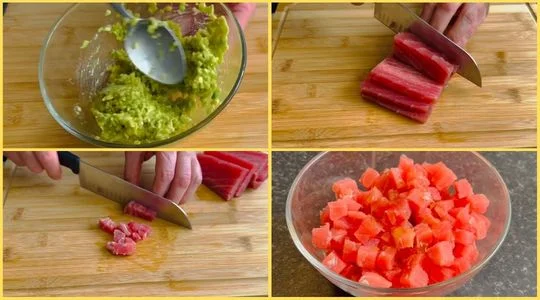
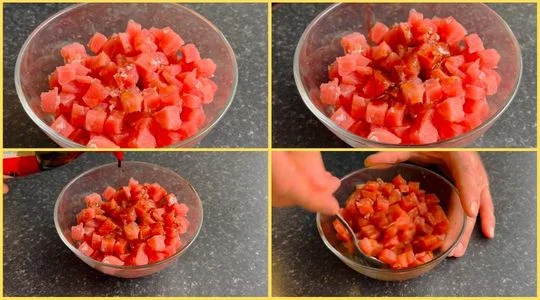
Start with properly chilled tuna intended for raw consumption. Using a sharp knife on a clean cutting board, cut the tuna into small, even cubes. Try to keep the pieces similar in size so the dressing coats them evenly and each bite has a consistent texture.
Transfer the diced tuna to a clean bowl and return it to the refrigerator while you prepare the other ingredients. Keeping the fish cold helps preserve its delicate texture and freshness.
Step 2: Dice the Avocado
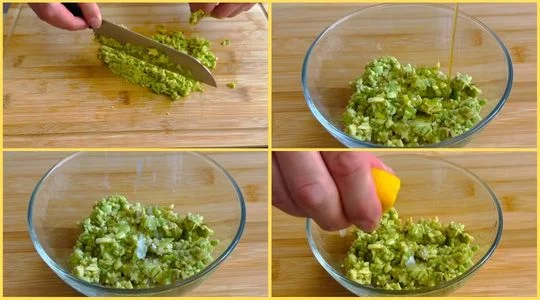
Cut the avocado in half lengthwise and remove the pit carefully. Scoop out the flesh, then dice it into small cubes roughly similar in size to the tuna.
Use a ripe but firm avocado so the pieces hold their shape when mixed. Set it aside while you prepare the dressing, and avoid cutting it too far ahead of time because the exposed flesh can begin to brown.
Step 3: Make the Soy-Teriyaki Dressing
In a mixing bowl, combine the olive oil, soy sauce, teriyaki sauce, and freshly squeezed lemon juice. Stir or whisk until the ingredients are evenly blended.
Taste a small amount of the dressing before seasoning. It should have a balanced combination of savory, sweet, rich, and citrusy flavors. Because the soy sauce and teriyaki sauce already contain salt, you may not need the full teaspoon of sea salt.
Step 4: Season the Tuna
Remove the chilled tuna from the refrigerator and add it to the dressing. Gently toss the cubes with a spoon until they are evenly coated.
Add a small amount of sea salt, taste the mixture carefully, and adjust the seasoning only if necessary. Avoid vigorous stirring, as the tuna should remain in distinct pieces rather than becoming mushy.
For the freshest flavor and best texture, keep this step brief and continue to assembly.
Step 5: Fold in the Avocado
Add the diced avocado to the seasoned tuna. Using a rubber spatula or spoon, gently fold the ingredients together until the avocado is lightly coated.
Take care not to mash the avocado. You want the creamy pieces to remain visible throughout the tartare, providing a pleasant contrast to the tender tuna.
Step 6: Plate and Serve
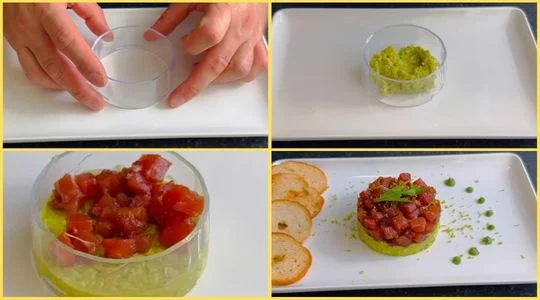
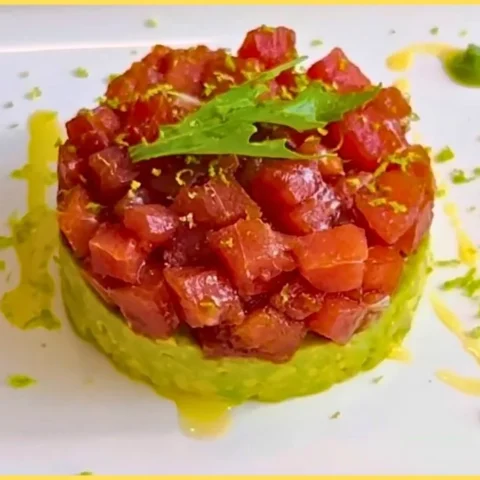
For a restaurant-style presentation, place a serving ring on a chilled plate and spoon the tuna mixture into it. Gently level the top without pressing the ingredients too firmly, then carefully lift away the ring.
You can also serve the tartare in a small chilled bowl or on individual appetizer plates. Add a little fresh lemon zest or a small garnish of herbs if desired, and serve immediately while cold.
Important food-safety note: Raw tuna can carry harmful microorganisms or parasites, and the term sushi-grade is not a universal guarantee of safety. Purchase fish from a reputable supplier who can explain its suitability for raw consumption and relevant parasite-control procedures. Keep it refrigerated at 4°C (40°F) or below, use clean utensils, and avoid serving raw fish to people at higher risk of foodborne illness, including pregnant people, young children, older adults, and those with weakened immune systems. Lemon juice does not make raw tuna safe.
Tips, Tricks, and Substitutions for Nobu Tuna Tartare
A few simple adjustments can help you get the best flavor, texture, and presentation from this homemade tuna tartare.
Choose High-Quality Tuna
The tuna is the star of the dish, so buy it from a trusted seafood supplier who specifically recommends it for raw consumption. Look for fish that has been handled and stored properly. Freshness, a clean smell, and careful temperature control are essential, but appearance alone cannot establish safety.
Cut the Tuna into Even Cubes
Aim for small, uniform pieces rather than large chunks or a finely minced mixture. Even cubes give the tartare a pleasant texture and allow the dressing to distribute evenly without overpowering the fish.
Adjust the Olive Oil to Your Taste
The original ingredient list calls for 100 ml of olive oil, which creates a rich, generous dressing. You can start with 2–4 tablespoons instead and add more as needed. This lets the delicate flavor of the tuna stand out while still giving the mixture a smooth finish.
Balance the Salt Carefully
Soy sauce and teriyaki sauce both contribute salt. Rather than adding the full teaspoon immediately, season the tuna gradually and taste the dressing first. This small adjustment can make a big difference in the final flavor.
Use a Ripe but Firm Avocado
An overripe avocado may break down as soon as you mix it with the tuna. Choose one that is creamy but still holds its shape when diced, and fold it in gently at the end.
Try These Simple Substitutions
-
Low-sodium soy sauce: A useful option if you want a less salty tartare.
-
Fresh lime juice: Can replace lemon juice for a slightly different citrus flavor.
-
Mild olive oil: A less peppery olive oil allows the fish and sauces to remain the main flavors.
-
Cucumber: For a lighter, crunchier variation, add a small amount of finely diced cucumber. It changes the traditional creamy texture, so use it only if you enjoy extra crunch.
-
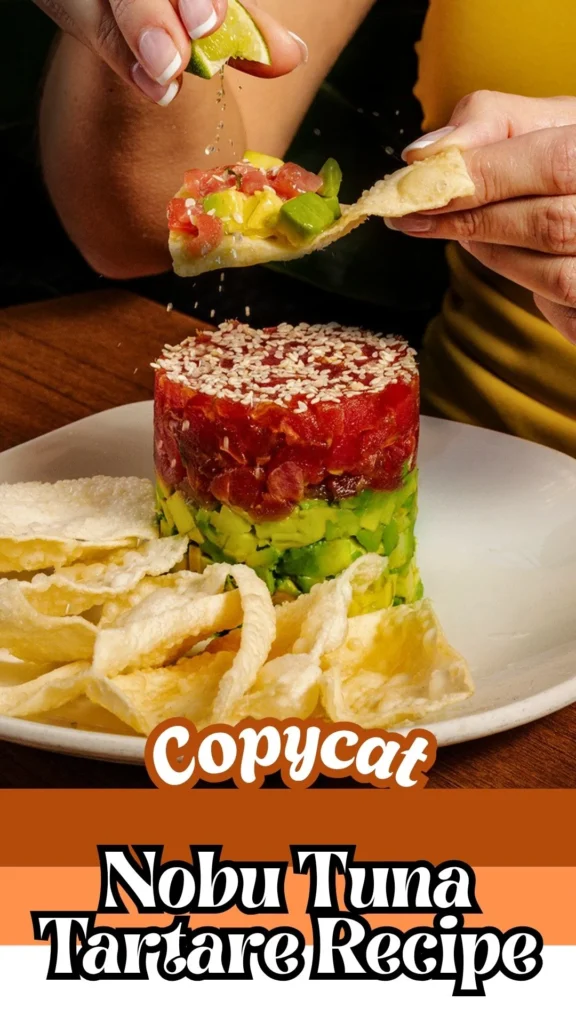
Sesame seeds: A small sprinkle can add a nutty finish and a little visual interest.
Keep in mind that these are optional adaptations of this homemade recipe, not necessarily ingredients used in Nobu’s original preparation.
Serving Suggestions for Nobu Tuna Tartare
This tuna tartare is versatile enough to serve as a starter, a light lunch, or part of a special seafood spread.
-
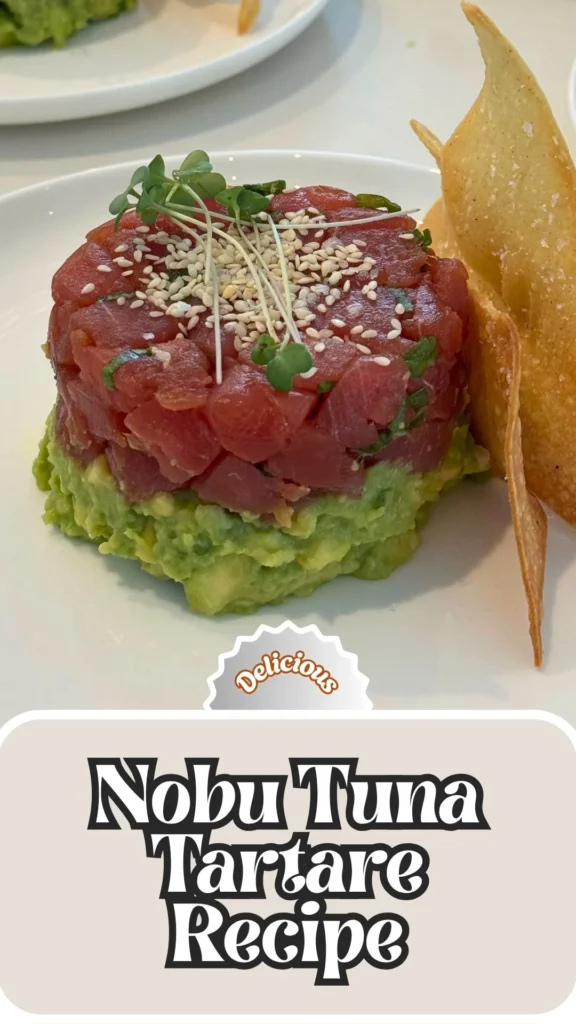
With crispy wonton chips: Their crunch contrasts nicely with the soft tuna and avocado.
-
Alongside cucumber slices: Fresh cucumber adds a crisp, refreshing bite and works well as a simple serving base.
-
With toasted baguette slices: Lightly toasted bread provides a crunchy base for small portions of tartare.
-
As part of a Japanese-inspired meal: Serve it before sushi, miso soup, steamed rice, or grilled vegetables for a varied menu.
-
As an elegant dinner-party appetizer: Divide the tartare into small individual portions and arrange them neatly on chilled plates.
-
With a simple green salad: A lightly dressed salad offers a fresh contrast to the rich olive oil and avocado.
For a more refined presentation, keep the portions small and avoid adding too many garnishes. The colorful tuna and avocado should remain the focus.
Storage and Reheating Instructions
Because this recipe contains raw tuna, it is best prepared just before serving rather than made ahead and stored.
-
Storage: Keep the tuna refrigerated at 4°C (40°F) or below during preparation. Once the tartare is assembled, serve it immediately. Do not leave it sitting at room temperature.
-
Leftovers: The safest approach is to avoid keeping leftover raw tuna tartare for another meal. Discard it if it has been left out for more than two hours, or one hour when temperatures exceed 32°C (90°F). Follow stricter local food-safety guidance when applicable.
-
Reheating: There is no reheating step because tuna tartare is served raw and chilled. Heating leftovers would change the dish, and reheating should not be used as a way to rescue improperly stored raw fish.
-
Make-ahead preparation: You can measure the sauces and prepare your equipment in advance. Keep the tuna cold and dice the avocado shortly before serving, then assemble everything at the last moment.
Nobu Tuna Tartare Recipe
Yield: 4Prep Time: 15 minutesCook Time: 2 minutesTotal Time: 17 minutesNobu Tuna Tartare is a restaurant-style appetizer that combines fresh tuna, creamy avocado, and a savory dressing made with olive oil, soy sauce, teriyaki sauce, and fresh lemon juice. Each bite delivers a delicate mix of smooth textures, bright citrus, and rich umami flavor.
5.0 Stars (2 Reviews)Ingredients
- 250 g fresh sushi-grade tuna
- 1 medium ripe avocado
- 100 ml olive oil
- 2 tablespoons (30 ml) soy sauce
- 2 tablespoons (30 ml) teriyaki sauce
- 1 lemon, juiced (approximately 2–3 tablespoons)
- 1 teaspoon (5 g) sea salt
Instructions
- Start with properly chilled tuna intended for raw consumption. Using a sharp knife on a clean cutting board, cut the tuna into small, even cubes. Try to keep the pieces similar in size so the dressing coats them evenly and each bite has a consistent texture.
Transfer the diced tuna to a clean bowl and return it to the refrigerator while you prepare the other ingredients. Keeping the fish cold helps preserve its delicate texture and freshness. - Cut the avocado in half lengthwise and remove the pit carefully. Scoop out the flesh, then dice it into small cubes roughly similar in size to the tuna.
Use a ripe but firm avocado so the pieces hold their shape when mixed. Set it aside while you prepare the dressing, and avoid cutting it too far ahead of time because the exposed flesh can begin to brown. - In a mixing bowl, combine the olive oil, soy sauce, teriyaki sauce, and freshly squeezed lemon juice. Stir or whisk until the ingredients are evenly blended.
Taste a small amount of the dressing before seasoning. It should have a balanced combination of savory, sweet, rich, and citrusy flavors. Because the soy sauce and teriyaki sauce already contain salt, you may not need the full teaspoon of sea salt. - Remove the chilled tuna from the refrigerator and add it to the dressing. Gently toss the cubes with a spoon until they are evenly coated.
Add a small amount of sea salt, taste the mixture carefully, and adjust the seasoning only if necessary. Avoid vigorous stirring, as the tuna should remain in distinct pieces rather than becoming mushy.
For the freshest flavor and best texture, keep this step brief and continue to assembly. - Add the diced avocado to the seasoned tuna. Using a rubber spatula or spoon, gently fold the ingredients together until the avocado is lightly coated.
Take care not to mash the avocado. You want the creamy pieces to remain visible throughout the tartare, providing a pleasant contrast to the tender tuna. - For a restaurant-style presentation, place a serving ring on a chilled plate and spoon the tuna mixture into it. Gently level the top without pressing the ingredients too firmly, then carefully lift away the ring.
You can also serve the tartare in a small chilled bowl or on individual appetizer plates. Add a little fresh lemon zest or a small garnish of herbs if desired, and serve immediately while cold.
Notes
Storage: Keep the tuna refrigerated at 4°C (40°F) or below during preparation. Once the tartare is assembled, serve it immediately. Do not leave it sitting at room temperature.
Leftovers: The safest approach is to avoid keeping leftover raw tuna tartare for another meal. Discard it if it has been left out for more than two hours, or one hour when temperatures exceed 32°C (90°F). Follow stricter local food-safety guidance when applicable.
Reheating: There is no reheating step because tuna tartare is served raw and chilled. Heating leftovers would change the dish, and reheating should not be used as a way to rescue improperly stored raw fish.
Make-ahead preparation: You can measure the sauces and prepare your equipment in advance. Keep the tuna cold and dice the avocado shortly before serving, then assemble everything at the last moment.Nutrition Information:
Yield: 4 Serving Size: 1
Amount Per Serving: Calories: 165
Common FAQs About Nobu Tuna Tartare
When you give this Nobu Tuna Tartare Recipe a try, you might have a few questions. Don’t worry-we’ve rounded up answers to the most common ones to help you out.
1. Can I Make Nobu Tuna Tartare Ahead of Time?
It’s best to prepare this dish just before serving. You can measure the dressing ingredients in advance, but keep the raw tuna refrigerated and separate from the dressing until you’re ready to assemble. Dice the avocado shortly before serving to help preserve its color and texture.
2. What Type of Tuna Is Best for Tuna Tartare?
Choose high-quality tuna specifically supplied for raw consumption by a reputable fishmonger or seafood supplier. Ask about proper handling and parasite-control measures. Yellowfin and bigeye tuna are commonly used in raw tuna dishes, but the best choice depends on availability, sourcing, and safety guidance.
3. Is Nobu Tuna Tartare Spicy?
This particular homemade version is not spicy because it contains no chili or hot sauce. Its main flavors are savory soy sauce, sweet teriyaki, rich olive oil, creamy avocado, and fresh lemon. You can add a small amount of chili if you prefer a little heat.
4. What Is Nobu Tuna Tartare?
Nobu Tuna Tartare is a restaurant-style appetizer inspired by Japanese-influenced cuisine. It features finely diced raw tuna seasoned with complementary flavors and served chilled. This recipe combines tuna with avocado, olive oil, soy sauce, teriyaki sauce, lemon juice, and sea salt for a simple homemade variation.
5. What Is the Difference Between Tuna Tartare and Tuna Sashimi?
Tuna tartare is made by cutting raw tuna into small pieces and combining it with seasonings or other ingredients. It often includes sauces, citrus, avocado, or garnishes. Tuna sashimi, on the other hand, is usually served as clean slices of raw fish, with its natural flavor and texture taking center stage.
In simple terms, tartare is generally chopped and seasoned, while sashimi is sliced and served with minimal additions.
6. Can I Make Tuna Tartare Without Avocado?
Yes. You can leave out the avocado if you prefer a more tuna-forward dish. The texture will be less creamy, but the soy-teriyaki dressing will still provide plenty of flavor. You could serve the tuna with cucumber or a small side salad instead.
7. How Do I Keep Avocado from Turning Brown?
Cut the avocado shortly before serving and gently coat it with some of the lemon juice in the recipe. Lemon juice can slow browning, but it does not prevent it completely. Keeping the dish chilled and serving it promptly will help maintain its fresh appearance.
8. Is This Nobu Tuna Tartare Recipe Gluten-Free?
Not necessarily. Regular soy sauce often contains wheat, and some teriyaki sauces also contain wheat or other gluten-containing ingredients. To make a gluten-free version, choose certified gluten-free tamari or soy sauce and a teriyaki sauce clearly labeled gluten-free. Check all ingredient labels to avoid cross-contact.
9. Can I Use Frozen Tuna for Tuna Tartare?
Potentially, but only when it has been handled and processed appropriately for raw consumption. Freezing can help control certain parasites under specific time and temperature conditions, but it does not eliminate every foodborne hazard. Ordinary frozen tuna is not automatically safe to eat raw. Follow your supplier’s instructions and applicable food-safety guidance.
10. How Can I Make My Tuna Tartare Look Like a Restaurant Dish?
Use a serving ring to shape the tuna and avocado into a neat round mound. Gently level the top, lift the ring carefully, and serve on a chilled plate. Keep the garnish simple so the colors and textures of the tuna and avocado stand out.
This Nobu Tuna Tartare Recipe is a lovely way to bring a little restaurant-style elegance into your home kitchen. With tender diced tuna, creamy avocado, and a balanced dressing of olive oil, soy sauce, teriyaki sauce, and fresh lemon juice, it delivers a refreshing combination of savory, sweet, and citrusy flavors without requiring any cooking.
The secret to a successful tartare is keeping things simple: choose responsibly sourced tuna intended for raw consumption, cut the ingredients neatly, balance the seasoning, and serve everything well chilled. These small details help create an appetizer that looks beautiful and tastes fresh.
Whether you’re preparing a special dinner or treating yourself to something different, this homemade tuna tartare is worth trying. Serve it in individual portions with crispy wonton chips or fresh cucumber, and enjoy a simple yet elegant starter made with care.
Additionally, You can also like and, follow us on Pinterest, and YouTube for more updates. Your thoughts and engagement are greatly appreciated!